

Breaking into the BIOS is not beneficial to any particular user. The reasons and results also vary greatly between gamers that want to achieve higher frame rates and professional gamers that want to gain stability and productivity. Although the methods and instruments might be similar, the ultimate objectives influence the orientation of each community towards unlocking the BIOS. It is also important to understand these differences so that we can begin to explain why a similar unlocked settings can result in completely different behaviour of the system.
Gamers: Performance and Responsiveness Pushing.
To a gamer, unlocked BIOS can become the gateway to increased frame rates, gameplay smoothness and latency reduction. The most blatant application is overclocking of the CPU and the GPU, and competitive players can trade off the final drop of power of their equipment.
Unlocked BIOS are also used by gamers to adjust timings of the memory to be more responsive in fast-paced games. The improvements can be felt even with small amounts of latency when it comes to milliseconds.
Another priority is fan curves and thermal management. Individual profiles allow the systems to be cooler when playing the game over extended periods without the need to be loud when performing less intensive functions. Such a performance/comfort balance is paramount to people who spend hours in the virtual worlds.
Above all, BIOS unlocking is appreciated by gamers due to its contribution to the increased hardware relevance. A system that is optimized in BIOS will last longer before upgrade is required due to costly upgrades. This stretch value capability is a major plus in an industry where the graphics cards and processors are being released on an annual basis.
Professionals: Stability and Efficiency Above All.
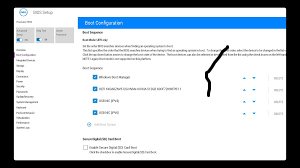
Gamers are more concerned with speed, whereas professionals usually emphasize on stability and reliability. To those who make content, create the development, or do the engineering, an unlocked BIOS becomes a means of making sure workloads will run without any bottlenecks.
Intel VT-X and AMD-V support the use of advanced features that enable IT specialists to manage multiple environments effectively. To video editors and 3D artists, fine-tuning of PCIe lanes is needed in order to make sure that the GPUs and high-performance NVMe drives can work to their maximum potential.
Configuration of the memory is also very important. Large and high-frequency RAM configurations are commonly used by professionals, and fine-tuning sub-timings can bring the performance up to speed in operations which consume large resources such as rendering or simulation. Whereas gamers may push the edge state of operational instability in favor of an extra frame, professionals will need no less than a hundred percent stability, since a crash during a project may result in hours of work.
Other areas of focus are power delivery and thermal controls. Systems running continuously under load are run by professionals who have settings that maintain voltages constant and allow them to keep the temperatures under control, to make sure that the equipment is in peak condition over a long duration.
A Shared but Divergent Path
Gamers and professionals agree on unlocked BIOS even though they differ on several occasions. The two groups are also based on the use of monitoring tools, stress testing post-changes, and are also based on the aim of making their systems more consistent with personal or professional objectives.
Their difference is in priorities. Gamers are willing to take a risk to get a reward, at times, they are willing to take instability in the name of gaining higher score in benchmarks or be more receptive in a competitive game. Professionals, on the contrary, take risks less, and like small profits, which ensure the functionality of operations in a mission-critical situation.
Customization BIOS Unlocking to Identity.
BIOS could only be so powerful because of its versatility in unlocking. It does not follow a one-size-fits-all approach but is a customizable toolkit. To a gamer, it could be the pursuit of records in overclocking contests or the attainment of a more enjoyable experience in eSports. In the case of a professional, it could be a few minutes saved in render times or a virtualized environment that is free of failure.
In both instances, the open BIOS is able to give users the power to create their systems to reflect their identity and priority. It is not a default manufacturer settings and instead the computer is a continuation of what is desired by the user- be it a win at a game or a win at a project.
